April 22, 2026

I built my first running app in 2011. Back then, the state of the art was basic GPS tracking with a map of your route and your average pace. No structured workouts, no training plans, no analytics beyond what you could calculate with a stopwatch and a notebook. The running tech landscape was so primitive that just seeing your route on a map felt revolutionary.
Over the next 15 years, I watched and participated in the evolution of running technology. Each generation solved a real problem while revealing the next one. GPS tracking solved the route and distance problem. Training plans solved the structure problem. Wearable integration solved the data collection problem. But one problem persisted through every generation: the plans never adapted to the runner.
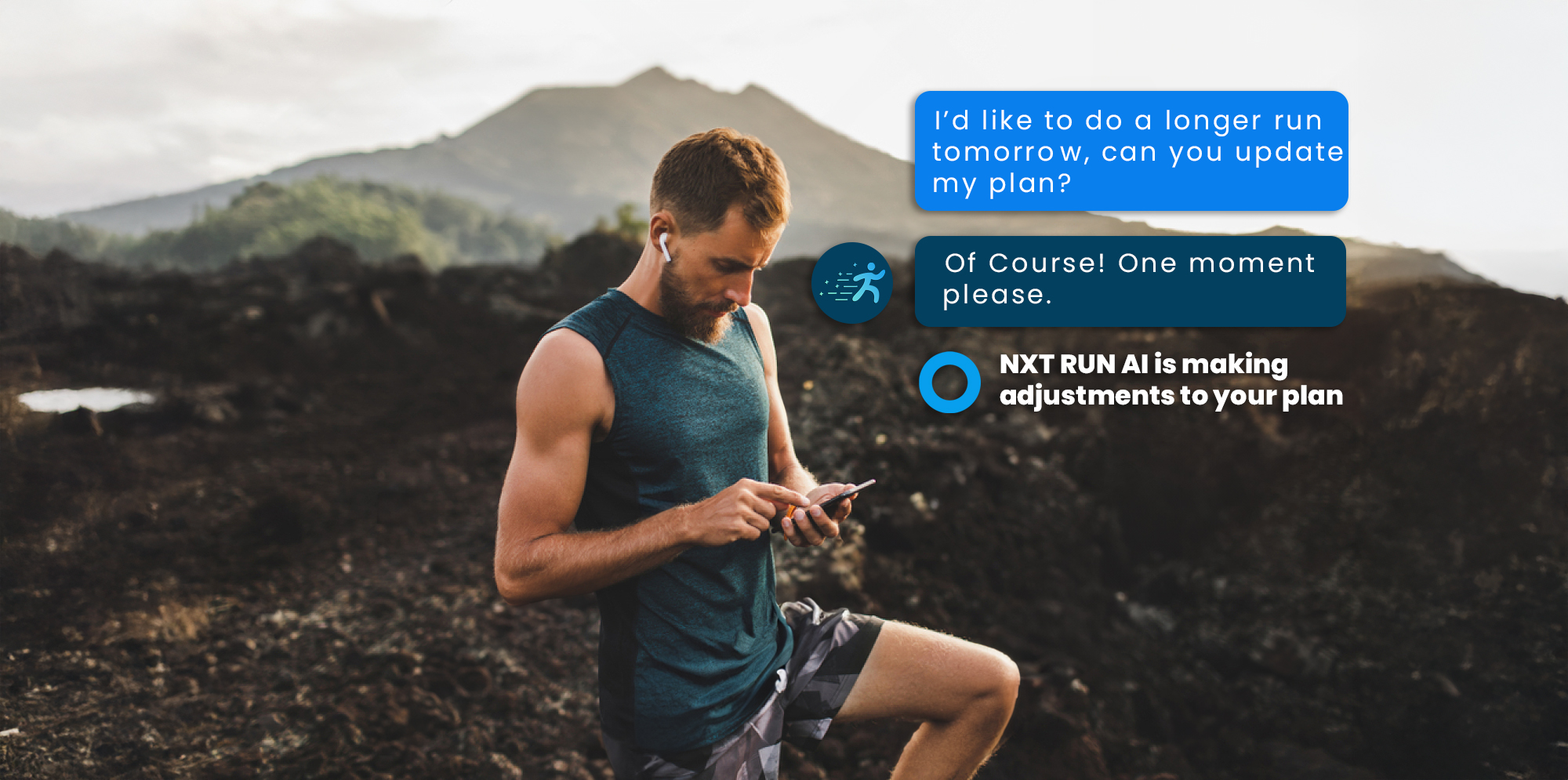
After building multiple running apps and working with thousands of runners, I've distilled what runners need into three things. First, they need a plan that respects their schedule. Not a plan that assumes they can run every day or that Tuesday at 6 AM is always available. A plan that works around their actual life.
Second, they need paces that reflect their current fitness, not their fitness from when they started the plan. A runner who starts a 16-week marathon plan as a 3:30 marathoner might be a 3:20 marathoner by week 10. If the plan doesn't update, they're undertrained for their potential. If they guess and push harder on their own, they risk injury.
Third, they need coaching feedback without the coaching price tag. A good coach watches your data, adjusts your plan, answers your questions, and keeps you on track. That costs $150 to $300 per month. Most runners can't justify that expense, but they still need the guidance.
Adaptive training isn't a new idea. Several apps have attempted it over the past decade. Most failed because the adaptation was too simplistic: if you missed a workout, the plan reshuffled dates but didn't recalculate intensities. Or the adaptation was too aggressive, swinging wildly based on one bad workout instead of looking at trends over weeks.
The breakthrough that made NXT RUN possible was combining long-term trend analysis with workout-level feedback. The app doesn't overreact to a single tough day. It tracks patterns across weeks, identifies meaningful shifts in fitness or fatigue, and makes adjustments that reflect your trajectory, not just your last run.

The biggest advantage NXT RUN has isn't technical. It's perspective. I've run a 14:40 5K and a 30:59 10K. My wife Aubrie has run a 2:59 marathon. We train in Boulder, Colorado, where every run involves altitude and terrain that most flat-ground plans don't account for. We raise four kids while maintaining competitive training schedules.
Every feature in NXT RUN exists because we needed it. The schedule flexibility exists because our Tuesday long run sometimes becomes a Thursday long run when a kid gets sick. The adaptive pacing exists because we know how frustrating it is to follow pace targets that no longer match your fitness. The device syncing exists because we got tired of manually entering workouts into our Garmin watches.
The gap between a private running coach and a running app is closing fast. With NXT AI's four specialized modes handling coaching conversations, workout analysis, plan modifications, and workout creation, we're approaching a level of personalization that was impossible even five years ago. The runners using NXT RUN today are getting a training experience that would have cost hundreds of dollars per month just a few years ago, for a fraction of that price. And we're just getting started.